OpenClaw: 302,000 stars, 110,000 commits and a daemon on your device
OpenClaw is reported as the fastest-growing open source project in GitHub history: over 302,000 stars per one report, 110,941 commits on my pull of October 15, 2026. What the record measures and what it does not, and why the daemon on your device is the real subject: three controls that turn autonomy into operation.
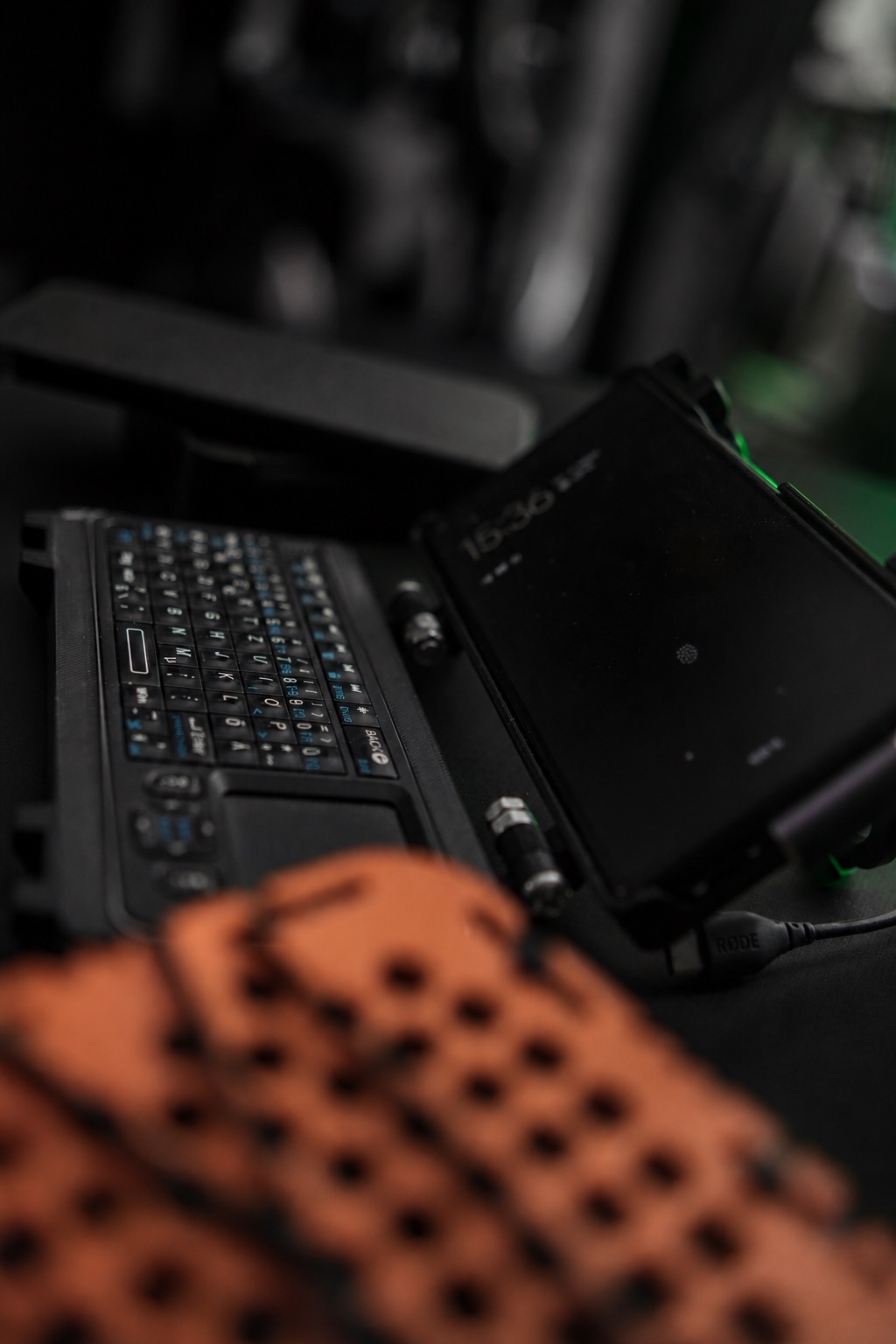
Kein fertiges Produkt und keine Hochglanz-Rückschau: Dieser Eintrag hält fest, was gebaut, getestet, verworfen und als Nächstes überprüft wird.
On October 15, 2026, around 07:00 MESZ, I read the OpenClaw repository directly on GitHub, and two numbers from that pull pushed the usual headline into the background. The first comes from a report by SOO Group: more than 302,000 GitHub stars, the fastest climb in the platform's history, outpacing what React, Vue.js and TensorFlow ever managed. The second sits not in a report but on the repo page itself: 110,941 commits on the main branch, more than 3,340 contributors, the last commit only minutes before my pull. My thesis is easy to state: the star record measures how fast people install something. It does not measure how well they run it. That gap decides whether an autonomous agent on your own device is a tool or a hazard.
OpenClaw in October 2026: what the repo state shows today
A live cross-check separates report from measurement, and that is worth doing with every record. What I read myself on October 15, 2026: openclaw/openclaw carries 505 tags, 7,224 branches, 110,941 commits on main, code led by 90.3 percent TypeScript with Swift and Kotlin for the device layer, and over 3,340 contributors logged. The project describes itself in one line as the AI that really does things, on any OS, on any platform, and its quick start makes that concrete: the onboarding command installs a daemon, so the project deliberately sets up as a permanent resident of your machine rather than a tool you take down at night. For the stellar side I work with the reported figure: over 302,000 stars per the SOO Group report of April 2026, which contrasts them against React needing over three years for 200,000, Vue.js over five and TensorFlow over four, while OpenClaw crossed 300,000 in months. A second thesis, which I quote strictly as a thesis, arrived through a longer portrait of the project: the fastest-growing open source run in history might also be the most dangerous thing you can install on your computer. Reported number, own number, someone else's thesis: three classes of evidence this article keeps apart.
The daemon is the real interface
Which brings me to the actual subject, something that neither stars nor releases touch: the daemon. A daemon is a process that runs whether or not you are operating it. In its installed form OpenClaw listens on messaging channels such as Telegram, Slack or Discord, executes shell commands, manages files and automates web tasks, all on your device. That yields a risk structure with exactly two classes, and every install should know them by heart. Class one: the agent does what you did not expect, because its permissions outlived your attention to that point. Class two: the agent does exactly the right thing, but you never learn about it because nobody logs it. The messenger coupling sharpens both, pleasantly for speed of use and unpleasantly for risk: it collapses the install threshold to one onboarding command, one daemon, and a chat window becomes the remote keyboard for your system. What a cloud provider would sign for and answer for shifts here to the operator: permission scope, updating, operational observation. The SOO report lists the safety kit as sandboxed environments, granular rights, command allow and block lists, resource limits and audit logging. The right list, but a list of possibilities is still not a practice.
From chat window to remote control: what the onboarding guide really covers
The onboarding page deserves a read, because it shapes the expectation that carries your first command. The guide presents the daemon entry as the recommended path, the command line from the quick start wires onboarding and the daemon flag together in one step, and after that the agent sits on your messenger. The prerequisites on that page sound harmless: one device as host, the model connection through a key, access to an application for contacts and messages. Harmless here depends on how you read, because all three prerequisites are building blocks of remote control: the host runs the processes, the key pays for them, the application opens the channel that later carries commands. The guide estimates a few minutes for setup and points safety questions to a dedicated page where rights and limits are maintained. That pointer structure is the real homework: installation takes minutes, operational supervision costs hours, and whoever reads only the first half leaves the second half blank. On my deck the same sequence took half a year, shaped by one failure and its correction, an OOM storm with five gateway deaths on August 28 and the hardening that followed. The daemon was never the problem, the missing supervision behind it was.
Three controls that turn autonomy into operation
Internal link: The rhythm of releases: Codex, pi and the two release cultures ↗
The counter-test runs on my deck, and it comes out sober. On a used Google Pixel 6a costing 45 euros I have operated an autonomous agent for years on the same formula that makes OpenClaw popular: local, controllable from chat, genuinely able to use files, scripts and services on the device. The operating figures sit in my own measurement registry of stability snapshots: 88 hours of uninterrupted operation from August 28, 19:40 to September 1, 12:18, zero out-of-memory kills since the hardening with an external cron tick and a semantic watchdog, 36 of 36 passing tests on the two verified projects built in the local workflow where Hermes plans, pi Agent executes and Hermes verifies. The point of these numbers is not that my setup is smarter than OpenClaw. The point is that the same capability on the same 45-euro phone demands the same discipline. A bundled update rhythm, which I keep for pi on the 1.2 series and Hermes on the 0.22 series, belongs to that discipline on Android: the commit flood stays an offer, and the operator, not the feed, decides about installation.
What the star record does not measure
The record measures how fast we install. How well we run it, it does not measure.
— Marcel, own formulation, October 2026
What the star record fails to measure shows in my own October 14 cutoff, the same sweep that measured the release culture of seven coding agents: OpenClaw commited loudest of the whole table with 4,254 commits in seven days while collecting only about 673 stars in the same window. Tempo and attention are two separate curves, and neither says anything about how safely anyone runs. The question I cannot answer myself, the one that comments on the record: growth at this pace strains maintenance quicker than documentation can keep up. Three years, five years, four years for React, Vue and TensorFlow meant time in which tools, practices and responsibilities could settle in. The 60-day run named in the portrait's title leaves two months for exactly that onboarding process. Whoever operates a daemon on their own machine has skipped the remedial course and carries the risk a provider would otherwise sign.
In the end there is a direction, not a verdict. Agents with a daemon interface are normalizing into home machines the way servers once did: suddenly, mostly through simplicity, with a risk migrating from the platform to the operator's desk. OpenClaw's star record is the first visible exclamation point of that shift, a document of speed, not a certificate of safety. Concrete limits of this piece: the star count is the reported April 2026 figure, not my own API query on this cutoff date; the install conditions are read from guides and reports; and a 45-euro deck is no server, so nothing here speaks to behavior under load. What I can prove: three controls that turn a daemon into an operation have run on my device since the hardening without one emergency stop, and the numbers sit in my measurement registry. If you are about to install a daemon of this kind, three questions should already have yes answers: Do you know its permissions? Do you see what it does? Can you stop it when you need to? Only after that do the stars count.
OpenClaw on GitHub: openclaw/openclaw, state of October 15, 2026 ↗
SOO Group: OpenClaw becomes the fastest-growing project with 302K stars ↗
Medium portrait: OpenClaw breaks React's ten-year record in 60 days ↗
Internal link: The rhythm of releases: Codex, pi and the two release cultures ↗
Internal link: The GitHub league of coding agents (Sep 26, 2026) ↗
Internal link: My operations report: the system stays, the model changes ↗
Frequently asked questions
What is OpenClaw and why does it matter?
An open source framework for autonomous agents that runs as a daemon on your own device and is steered through messengers like Telegram, Slack or Discord. It can execute shell commands, manage files and automate web tasks. It is reported as the fastest-growing open source project in GitHub history, over 302,000 stars per the April 2026 report.
How many GitHub stars does OpenClaw have on October 15, 2026?
The best-evidenced figure is the SOO Group report: over 302,000 stars, the fastest in platform history, against React taking over three years for 200,000, Vue.js over five and TensorFlow over four. I did not count the exact day-accurate star value on October 15 via the API; the repo pull does prove the activity level: 110,941 commits, 505 tags, more than 3,340 contributors.
Why is the daemon the real risk?
A daemon keeps running without operation, holds device permissions and, installed as OpenClaw, takes commands through messengers. The install threshold drops to one onboarding command, and the rest is a matter of permission scope and observability. Two risk classes: the agent does the unexpected, or it does the right thing in an unattended, unlogged way.
How does this work on your cyberdeck in practice?
On a used Google Pixel 6a costing 45 euros: hardening through an external cron tick and a semantic watchdog, then 88 hours of uninterrupted operation without a single OOM kill, 36 of 36 verified tests in the local workflow where Hermes plans, pi Agent executes and Hermes verifies, and a request window of 0.3 to 4 queries per hour.
Should you install OpenClaw?
That is an operational decision, not a recommendation. Settle these first: permissions (rights, whitelists, limits), observability (audit logging through reviews) and budgeting (resource and usage limits). SOO Group explicitly recommends pilots in non-critical environments and a security team review of the permission model before deployment.
About the author
About the author: I am Marcel, a graphic designer and operator of the HUNTER cyberdeck on a used Google Pixel 6a. The repo figures in this piece I read myself from openclaw/openclaw on GitHub on October 15, 2026, around 07:00 MESZ; the operating figures of my deck sit in my own registry of stability snapshots and daily notes, and the cutoff value of October 14 comes from my own release measurement. Reported figures such as the 302,000 stars are marked as reports in the text. Last fact-checked October 15, 2026.
Sources (retrieved October 15, 2026)
Sources: my own repo reading on October 15, 2026, 07:00 to 07:05 MESZ, openclaw/openclaw on GitHub (commits, tags, branches, language mix, contributors). Reported core figures: the SOO Group blog post on 302,000 plus stars (retrieved October 15, 2026). The thesis framing the safety debate: the Medium portrait by A. Aftab (retrieved October 15, 2026). Context of the agent week: the JetBrains blog on Mellum 2.1 of October 8, 2026 (retrieved October 15, 2026). Own measurements: the vault stability snapshots and daily notes (88-hour record, OOM kills, tests), and my own cutoff measurement of October 14, 2026, 05:07 UTC (commits and star drift).
Nachgebaut oder getestet?
Teile deine Erfahrung mit genau diesem Build-Log. Reviews werden vor der Veröffentlichung moderiert.
Noch keine Reviews für diesen Eintrag.
Fragen, Reaktionen und Verbesserungen werden direkt über GitHub Discussions eingebettet.
GitHub-Bereich öffnen ↗