GPT-5.5 retires on October 14: Codex runs out of assistant-shaped models
OpenAI pulls GPT-5.5 from ChatGPT and Codex on October 14, 2026. I put the official timeline next to the measured 2.25x token appetite of the successor and ask what retiring a frugal model costs a small agent operation.
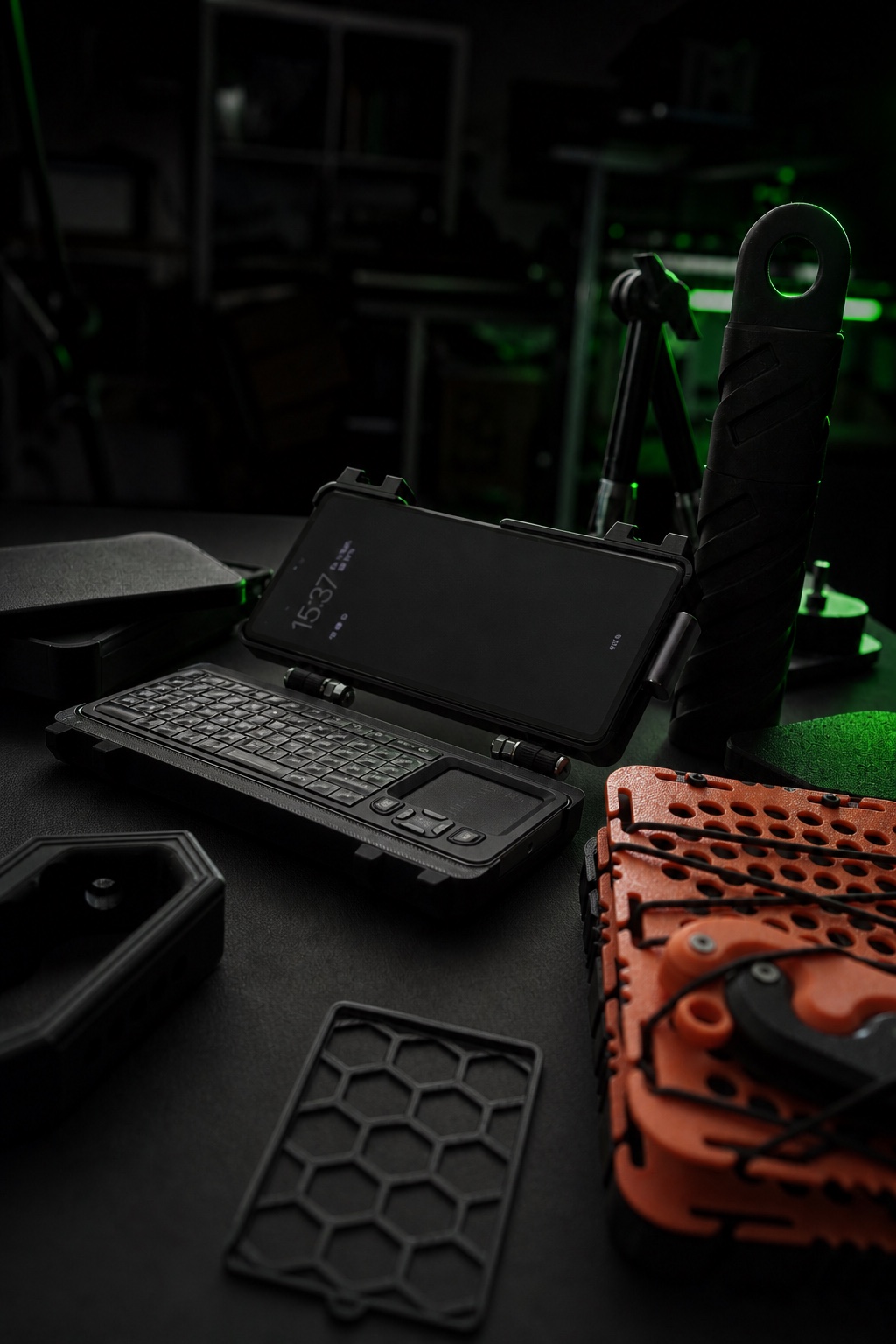
Kein fertiges Produkt und keine Hochglanz-Rückschau: Dieser Eintrag hält fest, was gebaut, getestet, verworfen und als Nächstes überprüft wird.
OpenAI is retiring GPT-5.5 from ChatGPT, ChatGPT Work and Codex on every plan on October 14, 2026. The official model documentation names GPT-5.6 Sol as the migration target, and the API stays untouched according to the same page. The reason this particular removal matters more to me than any announcement this month: GPT-5.5 was, going by the field reports, the last OpenAI model that behaved like an assistant, in the plain sense that it did the task and handed it back. It was also the frugal one. Vincent Schmalbach measured in his own session logs that GPT-6 Sol consumed 2.25 times the tokens per session that GPT-5.5 did. When rationed usage is the real price of a subscription, retiring the efficient model is not housekeeping, it is a cost thesis. This post lays out the official timeline, puts the measured numbers beside it, and asks what the swap means for small agent operations like mine.
The retirement clause: what OpenAI states
The facts compress into one source. OpenAI's model documentation, retrieved by me on October 10, 2026, lists GPT-5.5 with a retirement date of October 14, 2026 across ChatGPT, ChatGPT Work and Codex, on all plans. The API is not affected per that page: anyone booking the model through the interface keeps access. The migration notice inside Codex carries the same instruction: switch to GPT-5.6 Sol or stop working with the model. Sol is already the de facto default, because Codex release 0.159.1 from September 29, 2026 set GPT-6.1 Sol as the standard in the bundled catalog and in the Amazon Bedrock catalogs, recorded in the project's release list. The selection docs describe Sol as near-Astra capability at a lower cost, and the September 29 launch note puts the price frame at one fifth of Astra's standard input and output token prices. Nobody is switching from expensive to cheap here; the official line runs from frugal to officially affordable and measuredly hungrier.
174 days of shelf life, counted from official dates
One number changes how I read the whole event, and it comes from simple arithmetic over the official dates. GPT-5.5 launched on April 23, 2026 and goes dark on October 14, 2026: 174 days of service life inside the subscription products. I treat this as the single most telling figure of the episode because it contradicts a comfortable assumption. A subscription is not ownership of a model state, it is a lease with a visible expiry clause printed in the docs from day one. 174 days is not an accident of model care, it is the lifecycle shape the line has shown since the September Sol release and earlier arrivals. The operational conclusion is unglamorous: every dependency on a single model carries a termination date, and that date is usually published before any terminal notice appears. I now carry two dates for every model I depend on, the introduction date and the expected sunset window. Whoever completes the October 14 migration at least knows the pattern stands open on the successor too, because defaults churn the same way.
The measured delta: 2.25x tokens per session
Opinions about models are cheap, measurements are not. The only operational comparison I can cite for this swap comes from Vincent Schmalbach, who runs Codex on two subscriptions at 200 dollars a month and reads his session logs: GPT-6 Sol burned 2.25 times the tokens per session that GPT-5.5 did, per his August 2026 writeup. The same report describes Sol sessions that ran for 24 hours or longer, or died when the usage ran out, on tasks GPT-5.5 would have handed back after an hour. For the quota economy this reads plainly: a fixed monthly volume buys a different amount of finished work depending on the model's appetite. A model that spends twice the tokens for the same task halves the usable workday, whatever the price table claims. I have no OpenAI session logs of my own, so I carry this figure as a third-party measurement, described with its own setup of same task class and same subscription class, not as an official OpenAI statistic. The direction is corroborated by replies in the OpenAI developer forum, where users complain about Sol over-reasoning and expanding tasks.
I opened Codex CLI today and it showed me this notice: GPT-5.5 retires on October 14, 2026. Switch to GPT-5.6 Sol to continue working in Codex.
— Vincent Schmalbach, September 21, 2026, translated from the English original
Price tag and stamina are different currencies
Before translating the numbers into my own operation, the two sales lines need separating. The official pitch for the swap says GPT-6.1 Sol delivers near-Astra capability at one fifth of Astra's token prices; that sentence sits in the September 29, 2026 launch announcement. The measured pitch for the loss says GPT-5.5 returned comparable results on less than half the token volume, following Schmalbach's log analysis. Both sentences are true at once, and that coincidence is the actual lesson for purchase decisions under quotas: a token price describes a unit, session behavior describes a quantity, and finished work comes out of the product of the two. A model with a lower rate and double appetite is not a bargain, and a model with a full rate and stamina is not a loss. My own runbooks keep making the same mistake after every model swap: instinct number one checks the benchmark, instinct number two does the arithmetic over a workday's volume, and the second calculation has changed my decision every single time.
Why OpenAI retires it: Astra squeezes, Sol fills the gap
OpenAI has published no rationale for the October 14 date, so the motive ledger must be built from documented events. The pressure point is real: OpenAI paused new sign-ups to the 200-dollar Pro plan on September 10, 2026, and the help center attributes the pause to demand exceeding what the company can serve for Astra. The DevDay 2026 announcements at the end of September displayed the coping strategy: GPT-6.1 Sol as the near-Astra model at one fifth of Astra's token prices, an Ultrafast tier with up to 8 times faster generation, 300 tokens per second, in Codex and ChatGPT Work, tied to the new Pro 500 plan whose usage allowance the help center puts at 25 times the Plus allowance. Meanwhile the base keeps widening: The New Stack reported around 8 million Codex users in late September under the headline that usage caps remain the bottleneck. A retired frugal model, a successor installed as default, a rationed flagship: this reads like a two-tier portfolio that separates a throttled premium rail from a cheap mass rail. Whether that structure holds depends on the successor's stamina compared to the model it replaced.
April 23, 2026: GPT-5.5 launches as the assistant-shaped model of the OpenAI line, per model docs and launch notes.
September 10, 2026: OpenAI pauses Pro plan sign-ups, the help center names Astra demand as the reason.
September 15, 2026: A Pro subscriber asks in the OpenAI developer forum to keep GPT-5.5 as a legacy option; staff replies point at the API.
September 29, 2026: Codex release 0.159.1 makes GPT-6.1 Sol the default model in the bundled and Bedrock catalogs.
October 14, 2026: GPT-5.5 leaves ChatGPT, ChatGPT Work and Codex on all plans, the API remains.
What it means for my own agent fleet
My own operation reads this news from the workshop side. My pi worker runs on GPT-5.6 Sol, the very model Codex is switching to as its default, so the question of how much finished work Sol delivers per consumed volume is my daily bread, not a thought experiment. My own numbers live in the dashboard and deliberately stay out of this post. What I take from the Codex retirement is operational discipline. First, a model guarantee is not property but a dated condition, and 174 days is a realistic lifecycle, not an exception. Second, every operation needs a fallback that works without the favorite model; mine is the old unglamorous rule that the system stays and the model swaps, and it has survived every model rumor so far. Third, stamina per volume outranks benchmark wins; the pi against Codex comparison on one matched task showed it in miniature, the win cost tokens and tokens are the only resource that does not refill until the next window opens. Anyone building their workload on a model that leaves on October 14 needs an answer to a harder question: what does the same job for the same price tomorrow.
Limits of this reading and what the series takes from it
Two limits belong here so nobody walks away carrying a claim I cannot support. I hold no Codex session logs of my own, so the 2.25x token figure arrives through a third-party report that I read against its own methodology; it is consistently described but not an official OpenAI statistic. And the motive side remains inference from evidence: documented are the sign-up pause of September 10, the default change in the release line, and the published prices, not the intention behind them. Where the reading paid off: this blog has covered quotas, model churn and operations for months, and this post adds one more datapoint to a thesis no post in the series should drop. The real price of an AI model is not written on its pricing page, it accrues from token rate, stamina and lifespan. Whoever completes the migration on October 14 should carry away three numbers: 174 days of shelf life, the 2.25x token appetite of the successor, and one fifth of Astra prices as the official sweetener. Then hold your own logs against your own arithmetic, not against the price tag.
The system stays, the model swaps: my AI stack without a rebuild ↗
Sources (retrieved 10 October 2026)
External sources with retrieval dates:
- OpenAI, ChatGPT Learn, model documentation (GPT-5.5 retirement October 14, 2026 in ChatGPT, Work and Codex, API unaffected), retrieved 10 October 2026: https://learn.chatgpt.com/docs/models
- OpenAI, ChatGPT Learn, changelog (GPT-6.1 Sol launch September 29, 2026), retrieved 10 October 2026: https://learn.chatgpt.com/docs/changelog
- OpenAI, ChatGPT Learn, model selection (GPT-6.1 Sol, near-Astra capability at lower cost), retrieved 10 October 2026: https://learn.chatgpt.com/docs/model-selection
- OpenAI, DevDay 2026 recap (Sol at one fifth of Astra token prices, Ultrafast up to 8x at 300 tokens per second, Pro 500), retrieved 10 October 2026: https://openai.com/index/devday-2026-recap/
- OpenAI Help Center, Pro tiers (pause of Pro sign-ups from September 10, 2026 due to Astra demand, Pro 500 at 25x the Plus allowance), retrieved 10 October 2026: https://help.openai.com/en/articles/9793128-about-chatgpt-pro-tiers
- Vincent Schmalbach, OpenAI Codex Is Retiring the Last Model that Behaves Like an Assistant (September 21, 2026, retirement notice, 174 days, forum thread of September 15), retrieved 10 October 2026: https://www.vincentschmalbach.com/gpt-5-5-retirement-codex/
- Vincent Schmalbach, GPT-5.6 Sol uses twice the tokens of GPT-5.5 (measurement August 2026), retrieved 10 October 2026: https://www.vincentschmalbach.com/gpt-5-6-sol-xhigh-uses-twice-tokens-gpt-5-5/
- OpenAI Developer Forum, request to keep GPT-5.5 as a legacy option (September 15, 2026), retrieved 10 October 2026: https://community.openai.com/t/please-to-keep-gpt-5-5-available-as-a-legacy-option-in-codex/1397813
- GitHub releases, openai/codex 0.159.1 and 0.160.0 (Sol as default, agent command center history), retrieved 10 October 2026: https://github.com/openai/codex/releases
- The New Stack, GPT-5.6 Codex user surge (8 million users, usage caps as the bottleneck, September 24, 2026), retrieved 10 October 2026: https://thenewstack.io/gpt-5-6-codex-user-surge/
Own measurements: I hold no Codex session logs of my own, the token measurement comes from the third-party report cited above and is described there as such. Operating experience comes from my own agent setup on the Pixel cyberdeck, my own quota numbers stay in the dashboard and are not part of this post. All figures carry their cutoff date in the text.
When exactly is GPT-5.5 removed?
On October 14, 2026, GPT-5.5 leaves ChatGPT, ChatGPT Work and Codex on all plans, per the model documentation retrieved on October 10, 2026. The API is not affected by this removal.
Which model does OpenAI name as the migration target?
GPT-5.6 Sol, per the notice inside Codex. The docs describe Sol as near-Astra capability at lower cost; a third-party session-log measurement puts it at 2.25x the tokens per session compared to GPT-5.5.
How long did GPT-5.5 live in the subscription products?
174 days, from the April 23, 2026 launch to the October 14, 2026 retirement, counted from the official dates in the model docs.
Is the API affected?
No. According to the model documentation, API access to GPT-5.5 continues, the retirement applies to the subscription products ChatGPT, Work and Codex.
What should a small agent operation do before the deadline?
Map which workflows sit on the model, watch tokens per session before and after the swap, and keep a fallback stack ready. My standing rule remains: the system stays, the model swaps.
About the author
About the author: I am Marcel, a graphic designer and the operator of the HUNTER cyberdeck, an agent setup running on a used Google Pixel 6a. This post draws on the official OpenAI model documentation, the Codex release list, the DevDay announcements and two practitioner reports from September 2026, all retrieved on October 10, 2026. Operating experience comes from my own agent routines on the deck, my own quota numbers stay in the dashboard rather than the text. Last reviewed for accuracy on October 10, 2026.
Nachgebaut oder getestet?
Teile deine Erfahrung mit genau diesem Build-Log. Reviews werden vor der Veröffentlichung moderiert.
Noch keine Reviews für diesen Eintrag.
Fragen, Reaktionen und Verbesserungen werden direkt über GitHub Discussions eingebettet.
GitHub-Bereich öffnen ↗