Gemini Opt Out of AI Training: Chat History, Keep Activity, and the Three Real Routes
A Tell HN thread spells out the coupling in plain terms: keep your Gemini chat history and it trains the models, give up the history and the training stops. I read the Google documentation line by line and mapped the three real routes, using my own chat stacks as the contrast case.
Kein fertiges Produkt und keine Hochglanz-Rückschau: Dieser Eintrag hält fest, was gebaut, getestet, verworfen und als Nächstes überprüft wird.
# Gemini Opt Out of AI Training: Chat History, Keep Activity, and the Three Real Routes
Hacker News is running a thread since November 4, 2026 that asks a question millions of Gemini users will eventually ask themselves: if I pay for Google's AI subscription, does my conversation still train the models? According to the documentation the answer is yes, as long as the activity setting stays on. And the way out costs something many people are not willing to give up, the stored chat history with all the features built on top of it.
The thread is titled Tell HN: Gemini trains on chat history, even for subscribers, and it landed on my desk because we run the counter-draft already: agent conversations on our own hardware, our own storage, no cloud activity. So I went through the Google documentation piece by piece, sorted the three real routes and checked them against the deck. The result is neither panic nor a takedown, it is a plan for the question: which of my chats belong in which stack from now on?
What the Google documentation actually says
The baseline is the Gemini Apps Privacy Hub, whose latest documentation state is dated October 26, 2026, and which I retrieved on November 4. The central paragraph about activity reads like this: with the Keep Activity setting on, your chats and attachments land in your activity, and Google uses that activity to develop and improve its services, which explicitly includes training generative AI models, with the help of human reviewers. The activity auto-deletes after 18 months by default, configurable to 3 or 36 months, or never.
Then comes a passage with real bite: chats that have been reviewed by human reviewers are disconnected from your account after the review and retained for up to three years. Deleting your own activity does not delete those copies, because they are no longer attached to your account. Google advises in the same section, word for word, against entering confidential information while the setting is on. If you have been skimming that warning so far, read it once properly: it is the operating manual for exactly the wave this thread has triggered.
The coupling trap: keeping your history does not let you refuse training
The genuinely interesting part is not the training itself, it is the design of the setting. Keep Activity controls two things at once. First, whether your conversation history is stored so Gemini can personalize with it, memories, summaries, context. Second, whether that activity is used for training purposes. An independent switch that says train yes or train no, regardless of the history, does not exist in the documentation.
Turn Keep Activity off and the documentation lists three consequences. Future chats stop appearing in your activity and stop being used to train the models, with the exception of feedback you voluntarily send. They are still stored with the account for 72 hours, for responding, feedback processing and protection, using your last 24 hours as context. And some connected apps stop working, because personalization needs the activity. If you want the history and the convenience, you pay with training. If you refuse the training, you pay with the history, the personalization and a few features. That coupling is what the Reddit discussion around the topic boils down to: you cannot have both.
The three real routes in detail
Route one is the documented main path: Keep Activity off. Training of future chats stops, voluntary feedback remains your own risk. The price is listed above: no history, no personalization, a few connected apps less. For people who feed Gemini sensitive material at work, this is still the right baseline. One more thing to know: even with the setting off, Google holds your chats for 72 hours to process requests and protect the system.
Route two is temporary chats. The documentation says they are not used to train Google's AI models, and they stay connected to the account for 72 hours as well, with your last 24 hours as context. If you want to discuss something confidential one-off without touching your base setting, this is the clean single-trip route. The downside: no lasting history exists here either, the feature is deliberately short-lived.
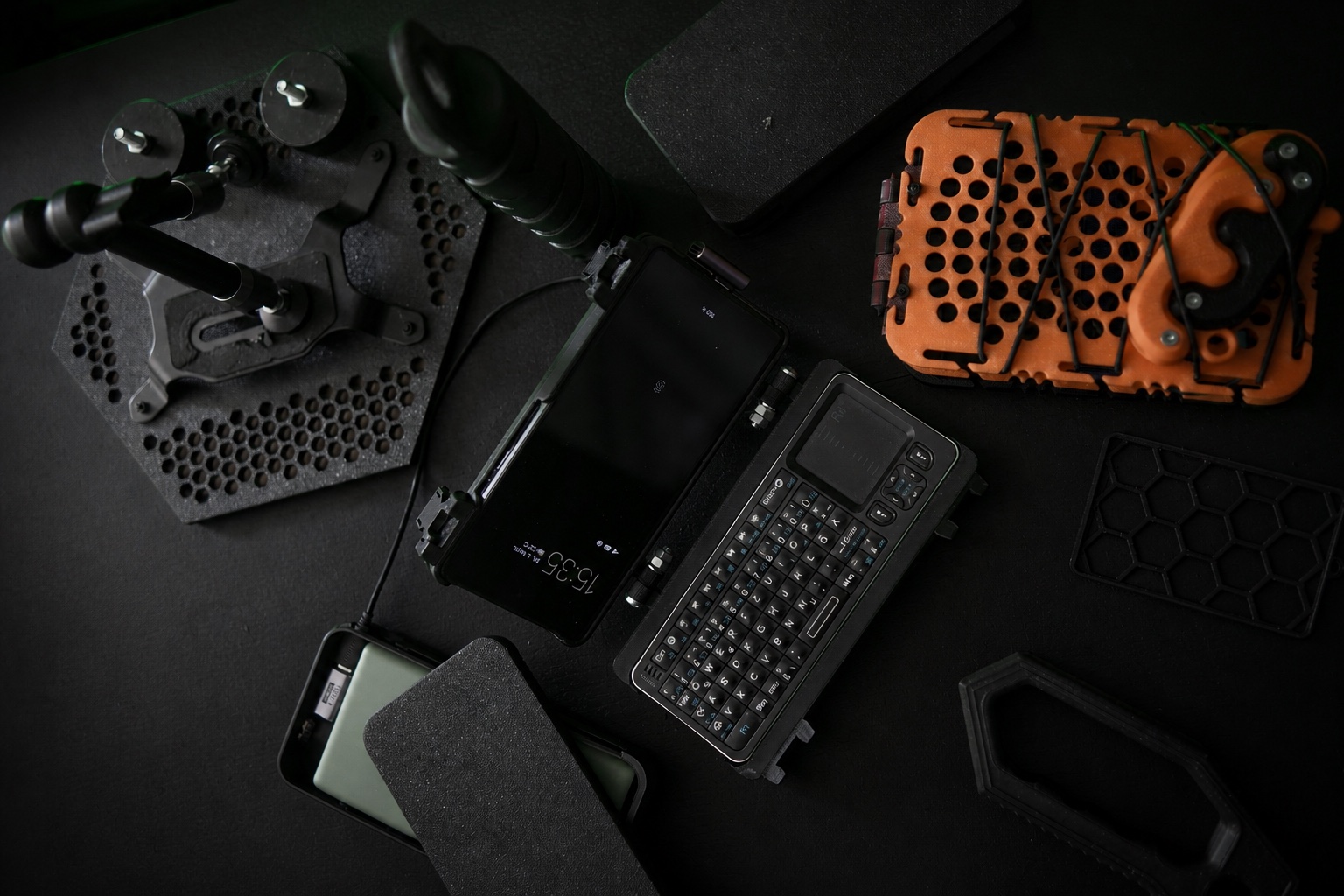
Route three is the one I run: conversations you genuinely want to keep should not live inside a cloud account context. The deck runs three separate stacks. The Ollama chat holds conversations locally, with the full history in its own storage. The Hermes agent has its own memories system, the chats live on my side, not at a model vendor. Claude Code gets code tasks only, no personal conversations. I will be honest about the limit: a local model sits below a frontier model in everyday quality, that is the price. I pay it deliberately for the conversations that are supposed to be kept, and I use frontier models for everything that touches nothing personal.
Between the hard lines of the documentation, three details help with the decision. First, audio and Gemini Live: audio recordings, live videos and screen shares are not used to improve Google services by default, so they do not automatically fall into training. Second, the memory summary: what Gemini understands about you and keeps in a summary can be viewed, edited and deleted, and that surface is what feeds the personalization. Third, the signed-out state: without a Google account, Google processes data like your IP address and browser type under the general privacy policy without associating it with your account, and the Gemini-specific privacy notice does not apply there. These details make the difference between panic and a plan: the coupling trap concerns account activity, not every single touch of Gemini.
If you have a personal Google AI subscription, all your saved chat history in Gemini can be used for training and there is no way to opt out unless you turn off chat history or use temporary chat sessions.
— The Tell HN thread, November 4, 2026
Map your own situation in 15 minutes
Step one: open the Gemini activity page in your Google account and check whether Keep Activity is currently on or off. That single state decides everything else. Step two: go through your recent chats and ask per conversation whether it contains anything you would not want to see as a reviewed copy for three years. Delete the chats that qualify, with the reviewed-copies caveat from the section above in mind. Step three: decide per chat type which route it takes from now on. Routine questions about recipes or research can stay in the cloud as long as nothing personal crosses them. Anything with names, contacts, customers, photos or finances belongs in a temporary chat or in a stack that lives with you.
Step four: actually set up the local route if your conversations run sensitive. The move is less work than assumed: install a model locally, put a chat frontend in front of it, keep the histories in your own file system. I describe that way of working in my piece on agent procedures. And if you want to go deeper into how such stacks run together on a used phone, the cyberdeck story covers the whole build including its limits.
Why the attention is deserved right now
The thread brings together three elements that rarely become visible at the same time. First the money: having a personal Google AI subscription does not protect you, because the training coupling hangs on the activity setting, not on the invoice. Second the human review: a subset of chats is read by people, and those reviewed copies live for up to three years regardless of deletions in your account. Third Google's own advice not to enter anything confidential while the setting is active. A paid product that tells its users, word for word, to avoid confidential input is a good moment to survey your own chat topography.
One word on the limit: whether this coupling is compatible in detail with European Union consent rules for subscription contexts is a legal question I do not decide here and cannot decide. I mark it deliberately as open. What I can assess is the documented product state, and that state says: the coupling trap exists, the HN thread did not misread anything.
Does my paid Google AI subscription get used for training?
According to the Gemini documentation, training hangs on the Keep Activity setting, not on the subscription type. With the setting on, your activity is used to improve Google services, explicitly including training generative AI models.
What happens when I turn Keep Activity off?
Future chats stop appearing in your activity and stop being used for training, as long as you do not voluntarily send feedback. They remain stored for 72 hours, with your last 24 hours as context. History, personalization and some connected apps go away.
Do deleted chats get deleted for good?
Not always. Chats reviewed by human reviewers are disconnected from your account and retained for up to three years. Deleting your activity does not remove those copies because they are no longer linked to your account.
Are temporary chats an alternative for confidential topics?
Temporary chats are not used to train the models per the documentation and stay connected for 72 hours with 24 hours of context. For one-off conversations without history they are the cleanest cloud route. No lasting history is created here, by design.
Is there a true opt-out without losses?
Not in the current documentation. Training state and history are coupled in one setting. If you want them separated, run the third route: sensitive conversations in a stack whose history lives only in your own storage. The limit is the quality gap between local and frontier models.
Sources and further reading
Gemini Apps Privacy Hub, latest documentation state October 26, 2026, retrieved November 4, 2026: https://support.google.com/gemini/answer/13594961?hl=en
Google help page on Connected Apps and Personal Intelligence with passages on training use and human review, retrieved November 4, 2026: https://support.google.com/gemini/answer/16836988
Tell HN thread Gemini trains on chat history, even for subscribers, November 4, 2026, 257 points at retrieval: https://news.ycombinator.com/item?id=50363461
Reddit discussion on the coupling question, read as an echo, not used as evidence: https://www.reddit.com/r/GeminiAI/comments/1psdmi0/why_does_gemini_even_paid_still_bundle_chat/
Own measurement: deck stack as of November 4, 2026, three separate chat systems, Ollama chat with local history, Hermes agent with its own memories system, Claude Code for code tasks without personal conversations.
Further reading from my archive: the way I keep agents procedural is in [agent procedures](post.html?slug=pi-skills-agents-procedures), the full deck build with its limits is in the [cyberdeck story](post.html?slug=hunter-cyberdeck-pixel-6a).
About the author
About the author: I operate agents on a used Google Pixel 6a and a Raspberry Pi, with a locally running chat, my own agent memories and code agents. I wrote this comparison between Google documentation and my own deck on November 4, 2026, with the stacks in live operation. Last reviewed November 4, 2026.
Nachgebaut oder getestet?
Teile deine Erfahrung mit genau diesem Build-Log. Reviews werden vor der Veröffentlichung moderiert.
Noch keine Reviews für diesen Eintrag.
Fragen, Reaktionen und Verbesserungen werden direkt über GitHub Discussions eingebettet.
GitHub-Bereich öffnen ↗