DeepSeek V4.1 Flash 1017: 77 Percent on Agentic Coding at 0.20 Dollars a Task, Beating Claude Opus 5 on Price
DeepSeek shipped 1017, a post-training refresh of V4.1 Flash that hits 77 percent pass@1 on the DeepSWE agent benchmark at roughly 0.20 dollars per task. The same weekend opened the company's in-house search engine as Search and Fetch APIs, free until Halloween, under looming export-control pressure on open weights.
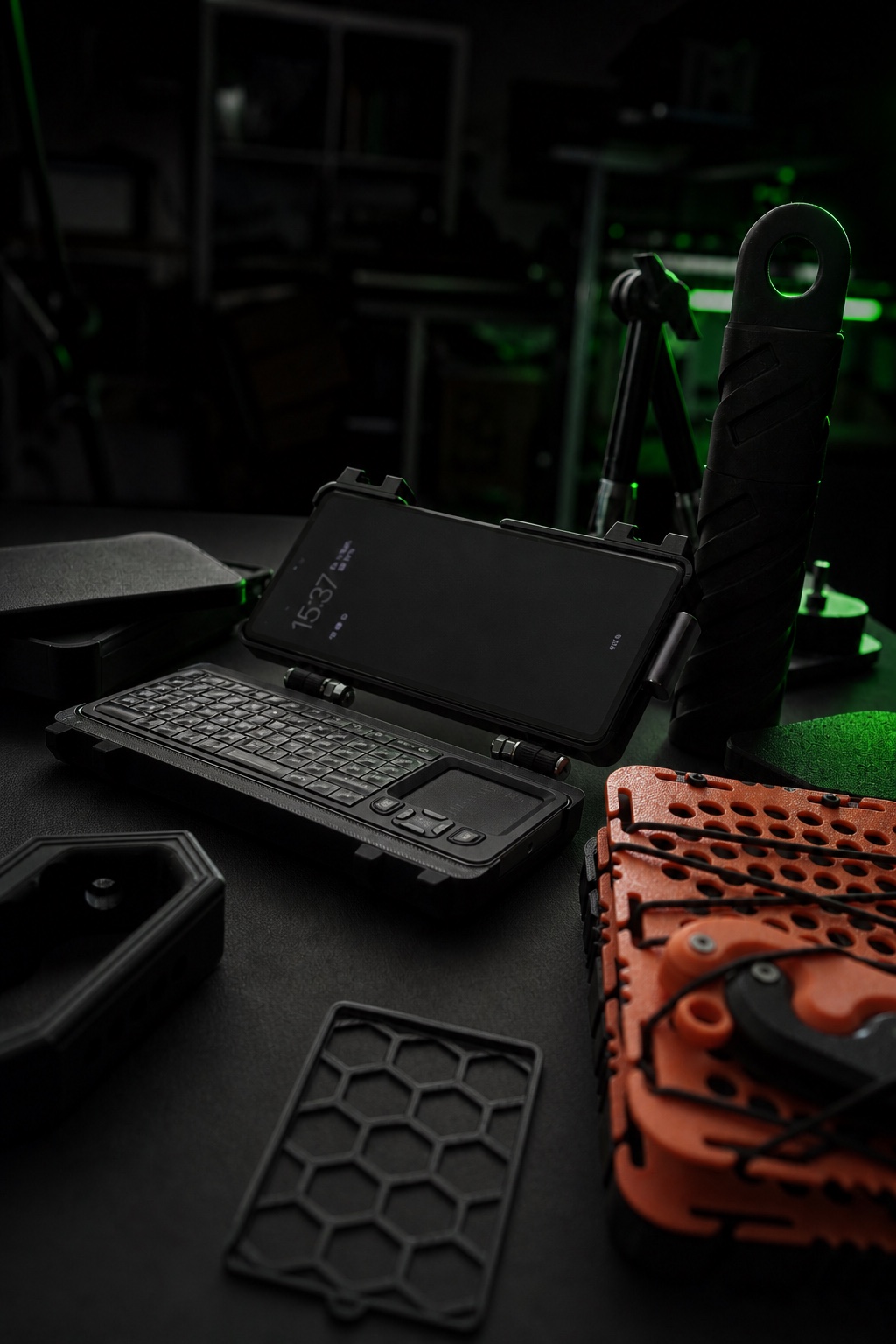
Kein fertiges Produkt und keine Hochglanz-Rückschau: Dieser Eintrag hält fest, was gebaut, getestet, verworfen und als Nächstes überprüft wird.
DeepSeek rarely ships on weekends; on Saturday, October 17, 2026, it did exactly that, turning V4.1 Flash into V4.1 Flash 1017. The suffix is just the date, yet the release reshuffles the agentic coding leaderboard by price. In DeepSeek's own charts the compact Flash model beats much larger rivals, including Claude Opus 5 and GPT 5.6-Sol, on coding and agent benchmarks at a fraction of their cost. In the same move DeepSeek opened its in-house search engine to outside developers through new Search and Fetch APIs, a strategic shift reaching beyond the model itself.
The weights are open on Hugging Face and ModelScope since release day; the model is live on web, app and API. DeepSeek pitches 1017 as a Pareto improvement between quality and cost: higher scores, faster completions, shorter outputs. That trade matters most in agent loops, because a coding agent re-sends its entire conversation history with every request and pays for that overhead again. Two of 1017's gains attack precisely this driver, leaner outputs and aggressively priced cache hits.
What the benchmark charts actually say
The house benchmark set moves consistently: Terminal Bench 4.0 climbs from 31.2 to 42.3, and the reverse-engineering suite, labeled Probench in the feed, jumps from 20.3 to 29.1. The chart everyone shares is DeepSWE 1.1, a cost curve plotting cost per task against pass@1. The new version reaches 77.0 percent, the predecessor V4.1 Flash scored 74.2, and V4 Pro 63. Cost per task drops from around 0.50 dollars to roughly 0.20 dollars, a cut of about 60 percent, and even the low setting clears 72 percent near 0.10 dollars. In the same chart, GPT-6 Astra, Gemini 3.8 Flash and Claude Opus 5 sit between 2 and more than 10 dollars per task without matching that accuracy.
Two caveats belong in the picture: every headline number comes from DeepSeek's own evaluation, and independent benchmarks have not surfaced yet. The Decoder notes that developer impressions of code quality can diverge sharply from benchmark scores. One early external data point, relayed through the feed and not independently verified: in the Arena standings of October 19 the Max variant passed Kimi K3 Max as the top open-source model in Code Arena webdev with 1,670 points, twelve behind the leader, ahead of flagship closed models.
Not a new architecture, but new post-training: reward from self-feedback
Technically, 1017 is the same machine as before, retrained. The backbone still holds 552 billion parameters, 8 billion active on input and 16 on output, the asymmetric causal encoder-decoder arrangement from V4.1 Flash carries over. What changed is the post-training recipe, reinforcement learning with self-feedback, RLSF for short: the model consumes its own confidence scores and self-generated critiques as the reward signal; human raters and external reward models drop out. The reason this works is the shape of agentic work itself: before an agent ships anything, it reviews its own output against the requirements, flags missing features and contradictory steps, so the quality inspector lives inside the model. A confident but wrong review, critics warn, digs a deeper hole than no review at all.
Context from September explains how the reward signal got reliable enough: DeepSeek had open-sourced DSAC, a sandbox for agentic training at scale, with hints toward recursive self-improvement, agent-built environments, session snapshots become the next scenarios. The demos show where this ends up: a three-dimensional Forbidden City, a browser racer, a Portal 2 tribute and Valley of Ages, a civilization sim from prehistory to the present, all built inside the DeepSeek Harness from a handful of prompts. Text-to-code explainer videos round out the set, narrated by a synthesized voice, . The Decoder confirms the directions, game programming, 3D modeling, design, and points to compact animated clips in the same vein as the recently released Claude Opus 5.5.
The bigger move: DeepSeek's own search engine becomes a public API
On release day DeepSeek opened two endpoints of its in-house search engine to all developers. Search returns title, URL, summaries, page text, date, re-rank and authority scores as JSON, and Fetch turns any URL into clean markdown. The harness calls both whenever the model needs the web, no Google or Bing wiring, one API key works, and DeepSeek says the setup is model-agnostic. Pricing sits at 0.75 dollars per 1,000 successful calls, the feed quotes 5 yuan per 10,000, identical. Failed calls, empty results and timeouts are free. The rate limit is five requests per second per endpoint, with filters against SEO spam, geo manipulation and low-quality AI content. By company account the index handles hundreds of millions of queries per day. Critics counter that it trails Google and Bing badly, that quality metrics are missing, and that the wiring is vendor lock-in for now.
The window is the message: inside DeepSeek Harness, Claude Code and Codex, the server-side search tools run free until October 31, 2026, 4:00 PM UTC, from November 1 the meter starts against the same API key. That is classic habit-building: free usage first, billing later, while the system learns what agents search for, valuable data for the index. The feed quotes rival pricing for scale: Tavily about 8 dollars per 1,000 calls, Brave and Google Custom Search around 5, Exa between 4 and 15, Serper near 1, DeepSeek 0.75. Strategically the move reaches past the model: OpenAI leans on Bing, Anthropic has no public in-house search, so DeepSeek fights the model war on cost per task and the distribution war for agent web access at the same time.
The shadow side: open weights under export-control pressure
The Decoder reported a day earlier that China plans to tighten rules for publishing open model weights, potentially blocking certain capability classes outright, with top-ten membership as the criterion. That is exactly the class 1017 plays in, which makes this update a candidate for one of the last open releases at this strength from China. For self-hosters and operators of their own agent stacks that is not a footnote: infrastructure cost and model sovereignty hang on whether weights ship at all. DeepSeek's position has long been explicit, Liang Wenfeng has stated the company would never open-source a weaker model and keep the strong one for itself.
On October 20, 2026, again per feed context, DeepSeek open-sourced its inference framework, Deep Infer, under Apache 2.0, the software behind its own service, with optimized operators, speculative decoding and JSON schema outputs, running on Nvidia SM100 and Huawei Ascend 950. The numbers attached are extraordinary: one cluster serves 155 trillion tokens per day, decode reaches 14,000 tokens per GPU per second, agent caches live three days in chat and seven on the 3FS cluster, 96 percent of the average 77,000 input tokens hit cache and throughput multiplies 25-fold. The Information estimates annualized revenue at about 1 billion dollars, the feed reports a funding round around 15 billion dollars, one of China's largest rounds ever.
What this means for agent operators
On my small agent deck, herdr on a metered model budget, 1017 reads as a pricing event with technical attachments. The metric that matters is cost per completed task, not price per token, and 1017 moves exactly that lever at 0.20 dollars per DeepSWE task. On the next routing rebuild I will test off-peak rates with cache hits: cached input runs at 0.04 and 0.02 yuan per million tokens per the feed, one fiftieth of the miss price, a different cost class for recurring long-history runs. Two reservations stay: until independent runs exist the 1017 numbers are vendor measurements, and I keep trusting my own dashboard; and the Saturday release confirms the standing rule, never assume a DeepSeek minor update is minor.
Summed up, the week of October 17 to 20, 2026 was a lesson in operating economics: a post-training jump delivers agentic coding at 77 percent pass@1 for 0.20 dollars per task, the search engine opens as the distribution lane with a free window ending October 31, and the open-weight question sits under explicit export-control scrutiny. Missing are independent benchmarks and first field reports from real agent loops. My stance: keep 1017 on the shortlist for off-peak runs, use the search trial before the meter starts, and track the export-control decision, it decides whether the next model in this class gets open weights at all.
- October 16, 2026
Report on Chinese plans to tighten or block releases of open model weights, criterion: top ten by capability (The Decoder).
- October 17, 2026
Release of DeepSeek V4.1 Flash 1017, Saturday, web, app and API, open weights on Hugging Face and ModelScope, RLSF post-training.
- October 17, 2026
Search and Fetch APIs go live, 0.75 dollars per 1,000 calls, free server-side in DeepSeek Harness, Claude Code and Codex until October 31, 2026, 4:00 PM UTC.
- October 19, 2026
Arena claim, feed context: Max variant as top open-source model in Code Arena webdev with 1,670 points, twelve behind.
- October 20, 2026
DeepSeek open-sources its inference framework, Deep Infer in the feed, under Apache 2.0 with cluster figures: 155 trillion tokens served per day (feed context).
- October 31, 2026
End of the free window for server-side Search and Fetch tools in Harness, Claude Code and Codex; billing starts November 1, 2026.
- October 25, 2026
This text: reading of release notes and The Decoder's report, draft filed for the newsdesk.
DeepSeek on the update, translated from the release notes: a Pareto improvement in the tradeoff between performance and cost, better scores, faster completions, shorter outputs.
What is DeepSeek V4.1 Flash 1017?
An update to the compact V4.1 Flash, shipped October 17, 2026, the suffix being the release date. It runs on web, app and API, and the weights are open on Hugging Face and ModelScope. The architecture is unchanged; the gains come from post-training with reinforcement learning and self-feedback.
What does RLSF mean?
Reinforcement learning with self-feedback: the model uses its own confidence scores and self-generated critiques as the reward signal, so human raters and external reward models drop out (The Decoder, October 17, 2026, read October 25, 2026).
Which numbers are confirmed and which are vendor measurements?
Carried in secondary reporting: 77.0 percent pass@1 on DeepSWE 1.1 at about 0.20 dollars per task, predecessor 74.2 percent at about 0.50 dollars, rivals at 2 to over 10 dollars in the same chart. All values originate from DeepSeek charts; independent benchmarks were still outstanding at release.
How much do the Search and Fetch APIs cost?
0.75 dollars per 1,000 successful calls. Inside DeepSeek Harness, Claude Code and Codex the server-side tools are free until October 31, 2026, 4:00 PM UTC, after that billing runs over the regular API key, with a rate limit of five requests per second.
Why is the open-weight question urgent here?
China plans, per reporting from October 16, 2026, to tighten or completely block the publication of open model weights, with top-ten capability membership discussed as the criterion. 1017 plays in exactly that class, so the next release at this strength is not guaranteed to stay open.
About the author: I am Marcel, a graphic designer, and I run the HUNTER cyberdeck on a used Google Pixel 6a in daily operation. This piece is based on DeepSeek's release announcement on X, the model pages on Hugging Face, the API documentation for Search and Fetch, and The Decoder's report of October 17, 2026, all read on October 25, 2026. The YouTube transcript of the AI Revolution feed served as the topical pointer; video-based numbers are explicitly flagged as feed context in the text. Last reviewed October 25, 2026.
The Decoder: Deepseek V4.1 Flash 1017 beats larger rivals (October 17, 2026) ↗
Feed video: DeepSeek Fires Again! (AI Revolution, October 24, 2026) ↗
Nachgebaut oder getestet?
Teile deine Erfahrung mit genau diesem Build-Log. Reviews werden vor der Veröffentlichung moderiert.
Noch keine Reviews für diesen Eintrag.
Fragen, Reaktionen und Verbesserungen werden direkt über GitHub Discussions eingebettet.
GitHub-Bereich öffnen ↗