Claude Sonnet 5.5 arrives: Anthropic speeds up the mid-tier and cuts the price
Anthropic ships Claude Sonnet 5.5, the second model of its 5.5 family: over 30 percent faster output than Sonnet 5, up to 30 percent cheaper for most work, and the first mid-tier Sonnet carrying cyber safeguards. A read from live agent operations, every number checked against the official Anthropic page.
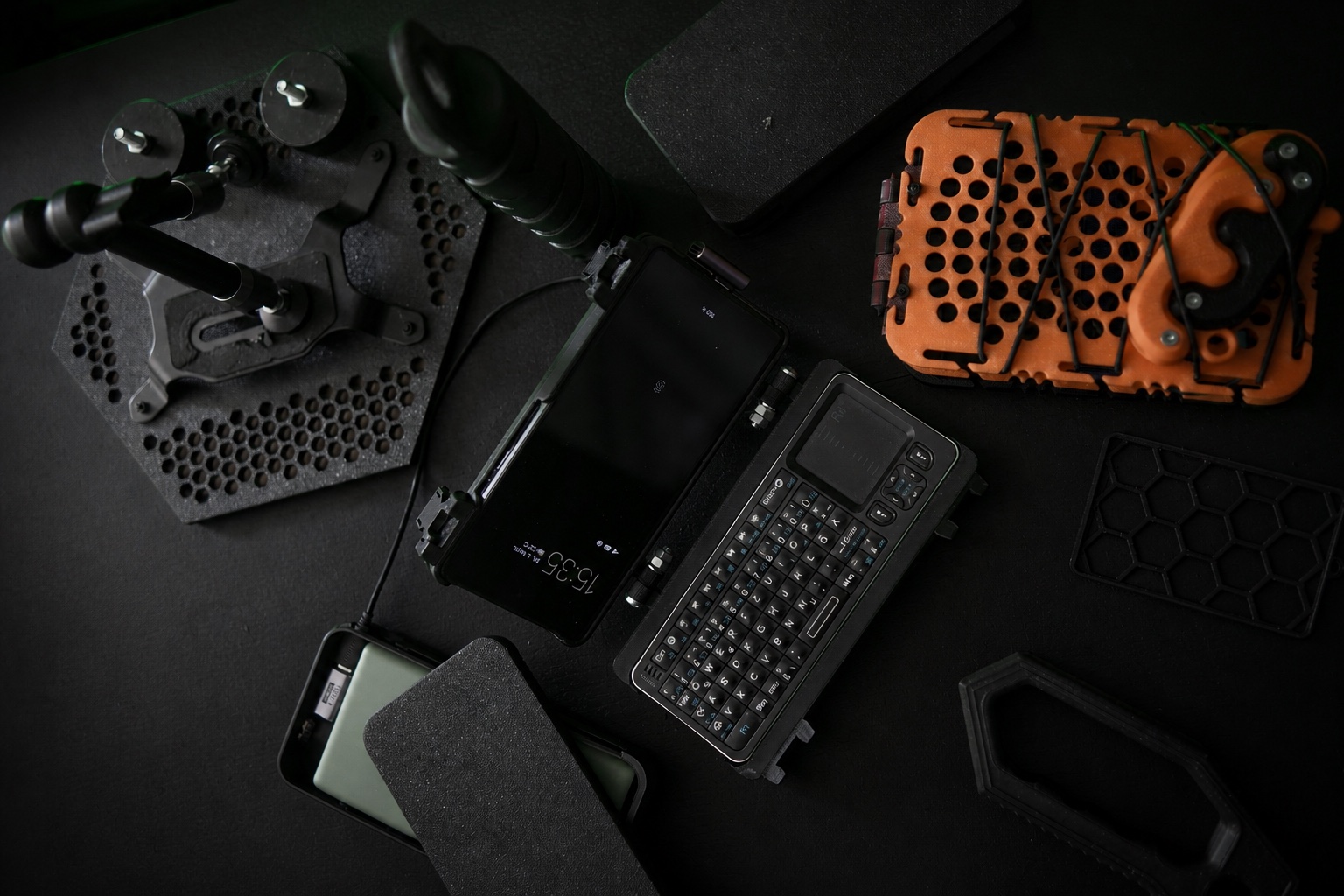
Kein fertiges Produkt und keine Hochglanz-Rückschau: Dieser Eintrag hält fest, was gebaut, getestet, verworfen und als Nächstes überprüft wird.
Anthropic shipped Claude Sonnet 5.5 on September 28, 2026, the second model in the Claude 5.5 family after Opus 5.5. The official page keeps the announcement short, and the brevity is the message: Anthropic calls Sonnet 5.5 a clear upgrade over Claude Sonnet 5, generating outputs more than 30 percent faster while costing up to 30 percent less for most work. The model is available on all major platforms, meaning Amazon Web Services, Google Cloud and Microsoft Azure. My reading is about the middle of the family, not the top: Anthropic positions Sonnet 5.5 explicitly as a faster, lower-cost complement to Claude Opus 5.5, while Claude Haiku 5.5, built for high-volume and cost-sensitive applications, should follow in the coming weeks. What triggered this post is a showcase video from the automation-marketing scene that demos full content pipelines built on the new model. Every claim here is sourced from the official Anthropic page and the official post on X; the video is a trigger, not a source.
What the official announcement actually commits to
The official page commits to four concrete claims. First, Sonnet 5.5 is a clear upgrade over Sonnet 5. Second, it produces outputs more than 30 percent faster than its predecessor, which makes it the fastest Sonnet model the company has shipped so far. Third, it costs up to 30 percent less for most kinds of work. Fourth, it is the first Sonnet model to launch with cyber safeguards and fallbacks, the protective layers Anthropic previously reserved for its most capable models. Notable is what Anthropic says about writing quality: the model writes more clearly than the previous generation, and early testers described it as a better partner for collaboration than Sonnet 5. That part is vendor talk, but vendor talk with a clear intent: the mid-tier model is no longer meant to feel like a compromise, it is meant to feel like the default choice for real operational work.
The middle tier is where agent budgets live
Why the middle tier is the most important piece of a model family comes down to plain operating math. The top of the family, Claude Opus 5.5 here, goes where single decisions are highly valuable. The bottom, Haiku 5.5 soon, is built according to Anthropic for high-volume and cost-sensitive applications. In between sits the field where agents actually run: many steps, many repetitions, many small tool calls per task. Exactly there, speed pays twice, because every per-token saving multiplies with every repetition. When the mid-tier computes more than 30 percent faster and costs up to 30 percent less, the math for whole pipelines changes: batching gets cheaper, parallelism gets more attractive, and the question of how much autonomy an operation grants an agent per week shifts noticeably. My own orchestration with Hermes, pi and herdr runs on a weekly request window; announcements like this change the radius of that window before any dashboard shows it.
Cyber safeguards now ship one tier down
The safety paragraph is the genuinely new part of the announcement. Anthropic states that the cybersecurity capabilities of Sonnet 5.5 are comparable to Opus 5, and because of that the model launches with cyber safeguards and fallbacks, mechanisms previously developed only for its most capable tier. The reading behind it: a model that keeps up with the top class in code work now also carries the protection class of the top. For agent operations this is not a footnote. The usual calculation so far says safety equipment and model strength sit together at the top, and cheaper bulk work comes with safety trade-offs. Cutting that coupling changes the negotiation in every direction: more autonomy at the same price, the same autonomy at a falling price, and the safety level no longer needs a separate premium. Worth watching now is how fast competitors follow, because a protection class that becomes mid-tier standard creates expectation pressure on everyone else.
Three levers for agent operations
For a running agent deck the announcement translates into three concrete levers. Shorter agent loops: more than 30 percent faster output tempo saves real time at every tool call, every intermediate step and every test run, and long pipelines sum that up across all steps. Falling unit costs: up to 30 percent lower costs for most kinds of work mean the same weekly budget either completes more tasks or completes the same tasks cheaper, and choosing between the two is a planning question, not a technical one. A wider autonomy base: cyber safeguards in the mid-tier reduce the risk costs of letting agents work with code unattended. The limit of this calculation: all three points are vendor statements and official positioning, not numbers from my own operation. In a setup with weekly limits and dashboard numbers, the truth stays in the own usage data; a model announcement changes the expectation, not the bill. Only the own usage log shows whether the price advantage actually arrives in the pipeline.
How I intend to use this in my own pipeline
In my own operation, the next pipeline run gets measured rather than believed. I orchestrate on a weekly request window and read the truth from the own dashboard, so three metrics interest me: real time per agent step, the request count per finished task, and the retry rate on tool calls. The baseline is the current tier my pipelines run on today. If the promised speed actually arrives, a run with many small steps should need noticeably less wall clock time without me touching the autonomy limits. The retry rate is the quiet indicator, because faster outputs are worthless if the agent needs more correction loops; the writing clarity Anthropic promises for Sonnet 5.5 would show exactly there. And the downside gets measured as well: if the saving only lives in the price list and not in the weekly window, my operating math stays unchanged, and then the release was a price statement, not an operating lever. Even that outcome is worth having, because the decision then rests on numbers, not on mood.
The showcase pipeline as a hygiene lesson
One side note from this run deserves its own paragraph: the showcase pipeline. Of twenty new videos in this feed check, nine come from a single automation SEO channel that demos exactly what it simultaneously advertises, complete content factories, auto-posting over MCP bridges, whole websites from a single prompt. The video that triggered this post is one of those showcases: it shows interfaces and results, no methodology, no primary source, and the automatic transcript of the clip misspells the model name as Sonic in several places. That is not automatically a scandal, but it is a structural trait of the present: the scene uses the very models it covers as production tools of its coverage. For a news channel this yields a hygiene rule: trigger video yes, evidence no. Every number in this post therefore comes from the official Anthropic page and the official X post, not from the video.
What this reading cannot tell you, honestly
Honest reading includes naming the limits. First, I have not tested any Sonnet 5.5 feature, the deck does not run this subscription, and every figure is a vendor statement with a cutoff date. Second, at publication time the official text carries no independent benchmark numbers; 30 percent faster and cheaper are Anthropic claims, not third-party measurements, and the baseline is the predecessor model, not the competition. Third, it remains open how the savings land in concrete tiers and API pricing, because the announcement speaks relatively, not absolutely. Fourth, the trigger video is a pure demonstration without an evidence chain. What is missing: a proper operating test that measures the own pipeline before and after a switch would be the real proof; the Haiku 5.5 announcement, expected in the coming weeks, can complete this post once it concretizes the high-volume side of the family. Anyone deriving an operating decision from this release should keep that gap in view.
- Sep 22, 2026
Anthropic opens the Claude 5.5 family with Claude Opus 5.5; Sonnet 5.5 and Haiku 5.5 are announced for the coming weeks.
- Sep 28, 2026
Claude Sonnet 5.5 releases: a clear upgrade over Sonnet 5, more than 30 percent faster, up to 30 percent cheaper, first Sonnet with cyber safeguards.
- Oct 10, 2026
This post: trigger video reviewed, every number checked against the official Anthropic page.
Related Posts
Related: Anthropic Skills Repo: Claude agents straight from the workshop ↗
Frequently Asked Questions
What is Claude Sonnet 5.5 and how is it positioned in the Claude 5.5 family?
Sonnet 5.5 is the second model of the Claude 5.5 family after Opus 5.5. Anthropic positions it as a faster, lower-cost complement to Opus 5.5 and as a clear upgrade over Sonnet 5, available since September 28, 2026 on Amazon Web Services, Google Cloud and Microsoft Azure.
How much faster is Claude Sonnet 5.5 than Sonnet 5?
According to the official announcement, the model generates outputs more than 30 percent faster than Sonnet 5, which makes it the fastest Sonnet model shipped so far.
How much does Claude Sonnet 5.5 cost?
For most kinds of work, Sonnet 5.5 costs up to 30 percent less than Sonnet 5 per Anthropic. The announcement gives the saving in relative terms, no new absolute token prices; the model is available through AWS, Google Cloud and Azure.
What are the cyber safeguards on Claude Sonnet 5.5?
Cyber safeguards and fallbacks are protective layers around the cybersecurity capabilities of a model. Sonnet 5.5 is the first Sonnet model to launch with them, because Anthropic rates its cyber capabilities as comparable to Opus 5.
When does Claude Haiku 5.5 arrive?
According to the official page in the coming weeks, built for high-volume and cost-sensitive applications. With it, Anthropic completes the three tiers of the Claude 5.5 family.
About the Author
About the Author: I am Marcel, a graphic designer, running the HUNTER cyberdeck on a used Google Pixel 6a. I orchestrate my agent family with Hermes, pi and herdr and write these posts from live operations. Last technically reviewed Oct 10, 2026.
Sources
Sources: Anthropic, Introducing Claude Sonnet 5.5, official announcement with speed, writing quality, price, safety and availability details, retrieved Oct 10, 2026. Anthropic, Introducing Claude Opus 5.5, official family announcement including the coming-weeks statement on Sonnet 5.5 and Haiku 5.5, retrieved Oct 10, 2026. Anthropic on X, release post for Claude Sonnet 5.5, retrieved Oct 10, 2026. YouTube: Julian Goldie SEO, Claude Sonnet 5.5 Is A Game Changer For Creators, trigger video, viewed Oct 10, 2026. Own context: agent operations on weekly request windows on the HUNTER cyberdeck, cutoff Oct 10, 2026.
Julian Goldie SEO: Claude Sonnet 5.5 Is A Game Changer For Creators (trigger video) ↗
Nachgebaut oder getestet?
Teile deine Erfahrung mit genau diesem Build-Log. Reviews werden vor der Veröffentlichung moderiert.
Noch keine Reviews für diesen Eintrag.
Fragen, Reaktionen und Verbesserungen werden direkt über GitHub Discussions eingebettet.
GitHub-Bereich öffnen ↗