AI Agents Take Over the Phone: Three Repos, Thirty Days, One Pattern
Four repositories around on-device agents collected more than 19,000 GitHub stars in under thirty days, none of them asking for root. I have measured the same pattern since August on a 45 euro phone. My GitHub query from November 2, 2026, and what it means for agent operations.
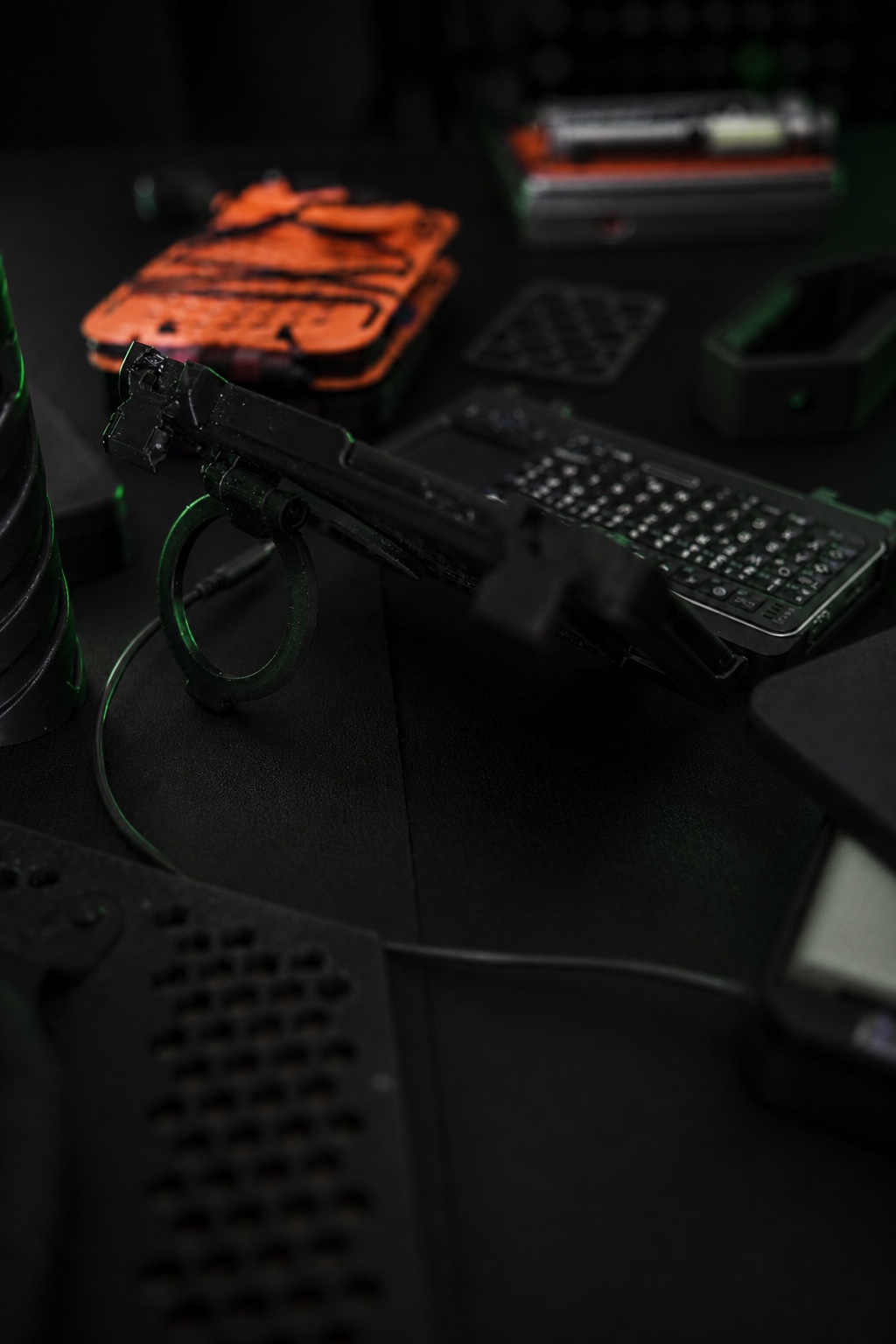
Kein fertiges Produkt und keine Hochglanz-Rückschau: Dieser Eintrag hält fest, was gebaut, getestet, verworfen und als Nächstes überprüft wird.
# AI Agents Take Over the Phone: Three Repos, Thirty Days, One Pattern
The platform fight between AI agents has opened a new front, and it lives in your pocket. Since August I have been running exactly the kind of operation the industry is now discovering: a used Google Pixel 6a as the body of an agent, the actual intelligence in the model, and software in between that organizes what happens on the device. For months this was my private experiment with a 45 euro phone. This morning I asked the GitHub search API what the community has been building over the last thirty days. The answer confirms the argument I have been making on this blog since summer: the agent is moving onto the phone, and it is moving without root.
Three repos, thirty days, one measurement
Method first, so the numbers stay readable. On November 2, 2026 at 06:47 UTC I queried the GitHub search API with the topic filter ai-agent, more than 300 stars, created after September 1, 2026, sorted by stars. The top results included four projects that sit squarely in my territory. android-ad-cleaner appeared on October 24 and had collected 5,747 stars by my query, which is nearly 5,700 in nine days. dsh-Go followed on October 25 and stands at 5,122 stars. Mika landed on October 29 and was already at 4,417 stars, more than 4,000 within four days. The oldest of the four, esp32-iphone-agent, shipped on October 11 and sits at 4,210 stars. Together that is over 19,000 stars for four repositories that all promise the same thing: an AI agent that works directly on the device or tightly attached to it, without opening the phone. Star counts say nothing about quality, I will come back to that. As a mood gauge for the community they are useful, and the curve is climbing steeply.
Mika: Android as an agent operating system
Mika describes itself in the repository summary as an on-device AI agent for Android that operates apps and the web to get things done for you. Translated into my vocabulary, that is nothing other than what I mean by cyberdeck: the phone becomes the execution organ, the model thinks, software on the device carries the decisions out. The difference to my setup is packaging. I assembled my system myself from Termux, the Hermes Agent, and a pi agent connected through herdr, block by block, and documented it in several posts. Mika is the same idea delivered as a finished app. The pace is the notable part: 4,417 stars in four days only happen when an idea hits an open need that the community had carried around unnamed for a long time.
Honesty is part of the evidence strategy on this blog: I have not tested Mika on my deck. What I can back up are the repository metadata and my own operating experience of what an Android device without root can and cannot do. Stars say nothing about code quality, nothing about security, and nothing about whether the app will still be maintained in eight weeks. That is exactly why I am not selling a recommendation here, I am describing a pattern. The pattern reads: a desktop is no longer enough for agents. Anyone building an AI agent in 2026 has to build it for the pocket, with everything that implies: battery, Android background restrictions, lean contexts, and the question of what happens when the device in your jacket loses its connection.
dsh-Go: the harness travels into the pocket
dsh-Go comes from a different corner of the story, which is precisely what makes the signal valuable. I translated the repository description from Chinese: the DeepSeek harness for your pocket, running locally on the phone, able to remote-control your computer as well. The autumn CLI wave produced the numbers the Pinggy blog documented on October 11: 247,000 stars for the DeepSeek Harness, 212,000 for OpenCode, 114,000 for pi. dsh-Go shows that the harness idea itself, a compact operating and safety frame around a model, is now being rebuilt for mobile. The phone is no longer just a screen for a server process, it becomes the place where the agent is organized. If you read a harness as an operating layer, the way I do, you watch the same architecture arrive at a new location.
android-ad-cleaner: the unintended proof
The most interesting of the four repositories is one that never intended to be an agent project at all. android-ad-cleaner removes ads, trending panels, recommendations, and marketing push messages from Chinese manufacturer phones, according to its description without root and fully reversible, with one-click execution driven by an AI agent. Here an agent was not built as a toy, it was built as a tool against a daily pain that millions of users feel every morning. And the community voted with almost 5,700 stars in nine days. To me that is the demand-side proof: ordinary people accept an agent that touches things on their device when two conditions hold. The result has to deliver visible benefit, and the process has to be reversible. Those two conditions, benefit and undo, are exactly the conditions under which my own operation runs. No root, nothing broken, everything documented.
Seven dollars against the closed device
esp32-iphone-agent pushes the pattern to an edge that shows how far the idea reaches. A microcontroller board costing roughly seven dollars serves as the hands of the agent, feeding USB HID input to the locked-down iPhone, with AirPlay acting as the eyes. The model behind it can be anything as long as the interface speaks the OpenAI-compatible protocol. An iPhone does not yield to the same treatment as an Android device, so the community builds the interface it needs instead. In one sentence, that is the philosophy I used to put a permanent operation on a 45 euro phone: do not buy the expensive platform, stay with the cheap device and outsmart the rest with software. The fact that seven-dollar hardware hacks are now climbing the trend curves tells you how much pressure sits behind this direction.
What I measure differently on the deck
While the repositories point at the direction, my own numbers come from sustained operation. Since the hardening that followed the OOM storm of August 28, my gateway has run without a memory death, the record between August 28 and September 1 stands at 88 hours uninterrupted, and since the hardening I count zero OOM kills. Two projects, a network obfuscation layer and a price compass, went through the local multi-agent workflow with 36 out of 36 tests passing, Hermes plans, the pi agent executes, Hermes verifies. None of that ran through a desktop code editor, all of it ran on the phone or was steered from the phone. That is the difference between the repos and me: they show that the idea has become majority-ready. I have spent months measuring what this operation endures. If you want the details, the kills are documented in my post on Android and the 45 euro device, the build in my post on the cyberdeck made from an old phone.
Why now, and what it means for the agent family
Three drivers explain the timing. First, models have become cheap enough that a permanently running agent is affordable, which I can read off my own cost picture. Second, Android opens the path through its accessibility interfaces, and the Chinese community that leads android-ad-cleaner and Mika has years of practice steering system devices without root. Third, the construction manual has matured: what the CLI wave of recent months learned about harness layers, gates, and protocols transfers to new locations with little friction. For the agent family that means something unusual: the market is heading toward what started here as a hobby setup. I read that not as a compliment but as proof. An operation that survives on a phone is not bought, it is built. The repos show that considerably more people have started to build.
Security is the open flank
One warning belongs in this picture. The Microsoft Security Blog published a postmortem on October 30 of an attack in which a malicious extension marketed under the Claude Code brand planted a persistent SSH backdoor on developer machines. The lesson counts twice for the phone wave: once agent tooling becomes mass software, the same supply chain questions travel onto the devices in our pockets. An agent allowed to operate apps and touch system settings is a powerful target. My rule on the deck stays the same: nothing lands on the device without a documented reason, and every new access path gets read before it exists. The repos of this week make the operation more convenient. Convenience and control are still two different things.
| Repo | Focus | Created | Stars on Nov 2, 2026 |
|---|---|---|---|
| Mika | On-device agent for Android | Oct 29, 2026 | 4,417 |
| dsh-Go | DeepSeek harness mobile, remote control | Oct 25, 2026 | 5,122 |
| android-ad-cleaner | Ad-free without root, agent execution | Oct 24, 2026 | 5,747 |
| esp32-iphone-agent | iPhone via ESP32 hardware hack | Oct 11, 2026 | 4,210 |
Questions and answers
Do I need root to run an agent on my phone?
No. All four projects described here work without root according to their descriptions, and my own operation has run without root since August on a used Google Pixel 6a. Root simplifies some procedures, but it is not a prerequisite for agent operation.
How does an on-device agent differ from a CLI coding agent?
The CLI agent manages code projects on a computer with a keyboard. An on-device agent operates the phone itself: apps, web, system settings. The harness layer underneath stays the same, the execution site changes.
Are GitHub stars a quality signal?
No. Stars measure attention over time. A high count says the idea reached many people, nothing about security, code quality, or maintenance. I use them as a mood gauge, not as a recommendation.
What does an operation like this cost per month?
My device cost around 45 euros used. Running costs depend on the model access, in my case largely a metered Ollama window with a weekly limit. I measure and document such numbers separately, this post quotes no monthly bill.
Where do I start if I want to build this myself?
With a used Android device, Termux, and a CLI foundation such as pi or OpenCode, all without root. The cleanest entry point is my post on building the cyberdeck from an old phone. The real hurdle is not software, it is the willingness to watch the operation for weeks.
About the author
About the author: I am Marcel, since 2026 I build the HUNTER cyberdeck from a used Google Pixel 6a and run an AI agent on it in sustained operation. This post draws on my own GitHub measurement from November 2, 2026 at 06:47 UTC via the GitHub search API and on my documented operation since August 2026. Last reviewed November 2, 2026.
Sources
GitHub search API, topic ai-agent, queried Nov 2, 2026, 06:47 UTC ↗
wangzan101/Mika, repository description, retrieved Nov 2, 2026 ↗
ccch1mneyyy/dsh-Go, repository description, retrieved Nov 2, 2026 ↗
rddmwmddr/android-ad-cleaner, repository description, retrieved Nov 2, 2026 ↗
onehumanbeing/esp32-iphone-agent, repository description, retrieved Nov 2, 2026 ↗
Pinggy blog: Top CLI Based AI Coding Agents, as of Oct 11, 2026 ↗
Microsoft Security Blog: Claude Code branded Cursor extension postmortem, Oct 30, 2026 ↗
Nachgebaut oder getestet?
Teile deine Erfahrung mit genau diesem Build-Log. Reviews werden vor der Veröffentlichung moderiert.
Noch keine Reviews für diesen Eintrag.
Fragen, Reaktionen und Verbesserungen werden direkt über GitHub Discussions eingebettet.
GitHub-Bereich öffnen ↗